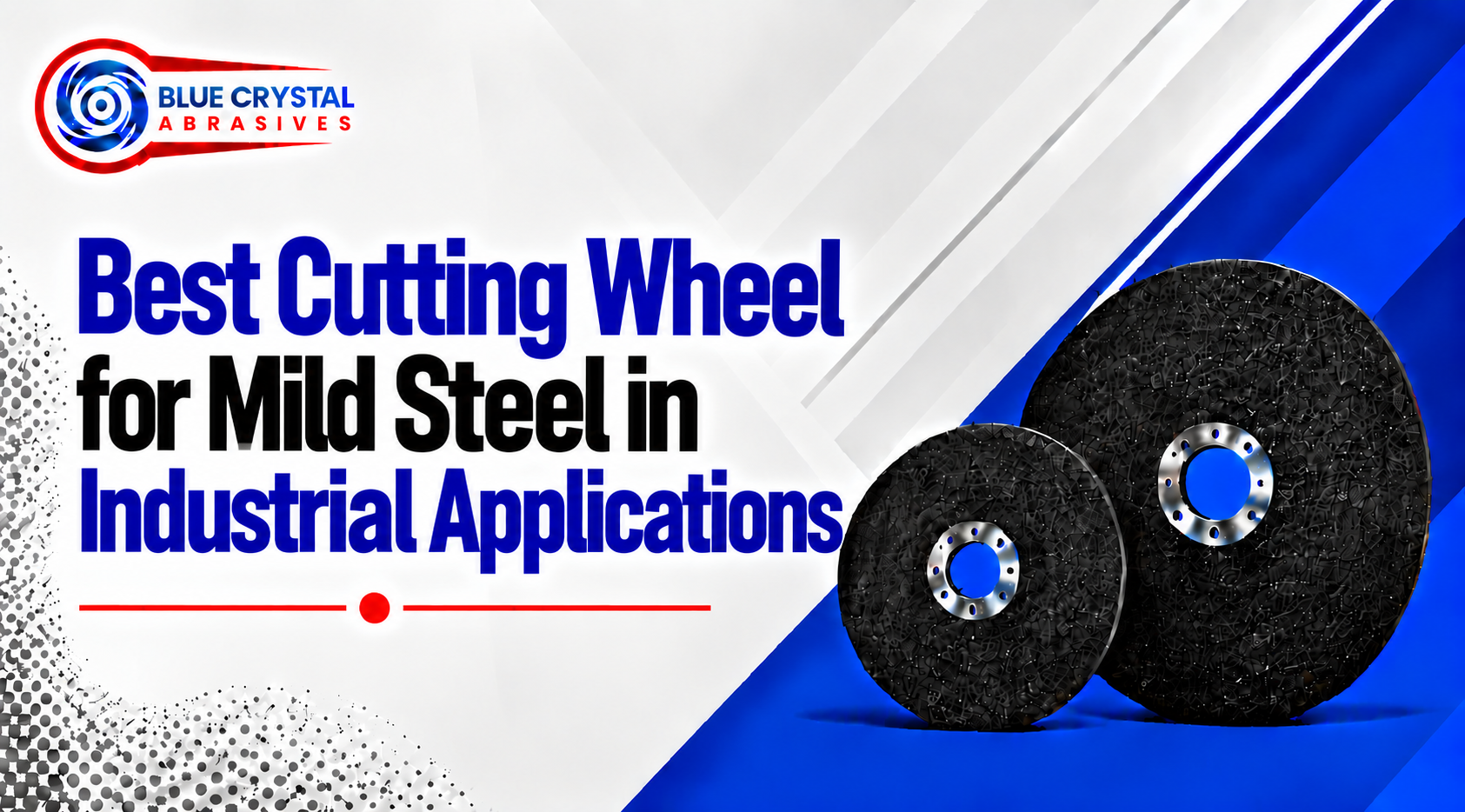
Mild steel is everywhere in fabrication and manufacturing. It is used for pipes, sheets, rods, angles, frames and structural components, which means cutting it is a routine job in many workshops.
But not every mild steel job needs the same cutting wheel. A thin sheet and a heavy steel section place very different demands on an abrasive disc. Machine size, wheel thickness and the type of cut also change what works best.
So, when looking for the Best Cutting Wheel for Mild Steel, the practical approach is to start with the job itself rather than choosing a wheel based only on diameter or price.
A cutting wheel contains abrasive grains held together by a bonding system. As the wheel rotates against mild steel, these grains remove material and gradually form the cut.
Several parts of the wheel influence how it behaves:
These specifications need to work together.
A wheel that performs well on a small steel pipe may not be the right choice for a thicker structural section. This is why manufacturers offer different specifications instead of one universal metal cutting disc.
There is no single answer that works for every application.
The Best Cutting Wheel for Mild Steel is one that matches the thickness of the workpiece, cutting machine and type of cut required.
For general fabrication, a Metal Cutting Wheel designed for mild steel can be used for pipes, rods, profiles and other components depending on its specification.
When a narrower cut is needed, a thin wheel may be more appropriate. Heavier cutting work may require a different wheel construction.
The key is matching the specification with the actual application.
Thin cutting wheels are commonly used when a narrow cutting path is preferred.
A Thin Cutting Wheel Manufacturer may produce several thickness options for different metalworking requirements. These wheels can be used for mild steel sheets, small pipes, profiles, rods and fabricated components depending on their specifications.
Because the wheel is thinner, less material needs to be removed along the cutting path.
That does not mean the thinnest available wheel should always be selected. Workpiece thickness, equipment and operating conditions still need to be considered.
Wheel thickness changes the way a cutting disc interacts with the material.
A relatively thin wheel creates a narrower kerf, which can be useful for controlled fabrication work. Other jobs may require a different wheel specification based on the size and thickness of the steel.
Before choosing, consider what you are actually cutting.
A thin sheet, hollow pipe and heavy steel section are three different jobs. Even when all three are mild steel, they may not require the same wheel.
This is more useful than selecting one wheel thickness and expecting it to handle every application.
Abrasive grain performs the cutting action but it is only one part of the wheel.
The bonding system holds those grains within the wheel structure. As the wheel is used, the interaction between abrasive grain, bond and workpiece affects cutting behaviour.
This is why wheel formulation matters in industrial applications.
When operators make repeated cuts throughout a working day, consistent product specifications become particularly important. Large variations between batches can make regular production work less predictable.
Resin bonding is widely used in abrasive cutting products.
A Resin Bonded Cutting Wheel Manufacturer combines abrasive grains with a resin-based bonding system and other components to produce wheels for defined applications.
Wheel dimensions, abrasive formulation and reinforcement may vary from one product to another.
For mild steel, users should select a resin bonded wheel intended for the material and compatible with their equipment rather than assuming every resin bonded disc will perform the same job.
Compact angle grinders are common in fabrication shops, repair work and industrial maintenance.
A 4 Inch Cutting Wheel can be used with compatible equipment for smaller mild steel components, pipes, rods and profiles.
Its compact diameter makes it practical for many everyday workshop jobs.
However, diameter alone does not determine compatibility. Bore size, wheel thickness, material application and maximum operating speed should also be checked before use.
Some abrasive cutting wheels use additional reinforcement within their construction.
Double Net Cutting Wheels contain reinforcing layers as part of the wheel structure. This type of design may be selected for applications where that particular reinforced construction is required.
Reinforcement should not be considered in isolation.
The wheel still needs to match the material, machine and intended cutting application. Buyers should therefore look at the complete product specification rather than selecting a disc only because it has additional reinforcement.
Mild steel appears across a wide range of industries, so cutting requirements vary considerably.
Fabrication shops use cutting wheels to prepare sheets, pipes, angles and profiles before welding or assembly. Engineering workshops may use them when producing or modifying components.
In construction-related metalwork, steel sections often need to be cut according to project requirements. Maintenance teams also use abrasive wheels during repair and replacement work.
Automotive and general manufacturing applications create further requirements.
Even though the material may be the same, the wheel specification can change according to the size of the workpiece and the type of cutting operation.
Start with the material and its thickness. Once that is clear, check which wheel diameter is compatible with your machine.
Next, consider the required cut. If lower material removal and a narrow kerf are priorities, a thin wheel may be appropriate. For a different type of workpiece, another specification may make more sense.
The wheel's maximum operating speed must also be compatible with the equipment.
For businesses purchasing larger quantities, manufacturing consistency and repeat availability are worth considering as well.
This approach is more practical than choosing a product simply because it is described as a general-purpose cutting wheel.
An Abrasive Cutting Wheel Manufacturer develops different products around material and application requirements.
For industrial buyers, a broader product range can make it easier to source different wheel diameters and thicknesses from the same manufacturer.
Product specifications should also remain consistent across repeat orders. This matters for fabrication and manufacturing businesses where cutting wheels are consumed regularly.
Technical product information, packaging, supply capability and manufacturing controls can therefore be just as relevant as the individual wheel itself.
Even the right cutting wheel needs to be used with compatible equipment and according to its specified operating conditions.
Before use, check that the wheel is intended for the material and machine. Inspect it for visible damage and verify the maximum operating speed.
Suitable protective equipment and the machine's required guards should also be used during cutting.
Avoid applying unnecessary force to make the wheel cut faster. The equipment and abrasive wheel should be operated according to the manufacturer's instructions.
The Best Cutting Wheel for Mild Steel is not necessarily the thinnest, largest or most expensive option. It is the wheel whose specification matches the job.
Material thickness, wheel dimensions, abrasive construction, reinforcement and machine compatibility should all be considered together.
For fabrication, engineering, maintenance and manufacturing work, choosing the correct mild steel cutting wheel can support more controlled and consistent cutting. For regular industrial use, working with a reliable Abrasive Wheel Manufacturer also makes it easier to source appropriate specifications across different cutting requirements.