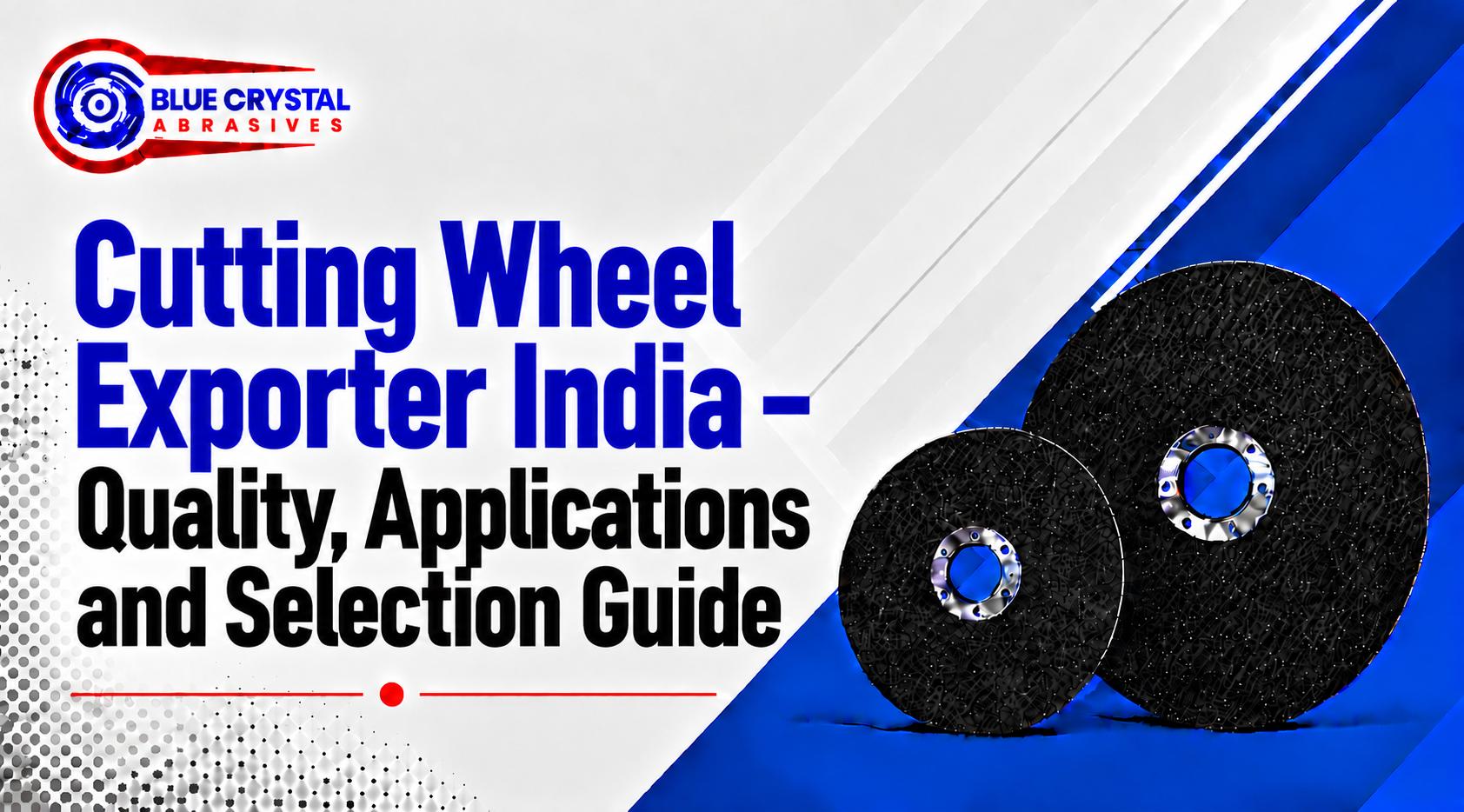
Cutting wheels are widely used in fabrication units, construction projects, automotive workshops and metal processing industries. Although these wheels may look like simple industrial products, their quality can have a direct effect on cutting speed, accuracy, finish and productivity.
The right cutting wheel can make metal-cutting work faster and more controlled. An unsuitable product may wear out too quickly, create rough cuts or put unnecessary pressure on the machine. This is why businesses must consider the material, application and machine specifications before choosing a cutting wheel.
India has developed into a reliable sourcing destination for abrasive products. Indian manufacturers are improving their production systems, testing processes and product ranges to serve both domestic and international markets. For companies purchasing abrasive wheels in bulk, working with a professional Cutting Wheel Exporter India can make the sourcing process more organized and dependable.
A cutting wheel removes material through abrasive action. When the wheel rotates at high speed, its abrasive grains come into contact with the metal and create a controlled cut.
A suitable cutting wheel can help produce cleaner cuts while reducing unnecessary material loss. It may also help the operator complete the work with less effort when the wheel specification matches the machine and material.
Different industries work with different materials and thicknesses. A wheel suitable for mild steel may not be the ideal option for stainless steel. In the same way, a product used for cutting thick metal sections may have different specifications from a wheel designed for thin sheets.
Important selection factors include wheel diameter, thickness, abrasive grain, bonding system, reinforcement and machine compatibility. Buyers should review all these points before placing a bulk order.
Consistency is especially important for international buyers. When a company orders hundreds or thousands of wheels, it expects each batch to provide dependable performance. Major differences between batches can affect production schedules, operating costs and customer satisfaction.
An experienced Abrasive Cutting Wheel Manufacturer understands how every component affects the final product. Abrasive grains carry out the cutting action while the bonding material keeps those grains together during use. Reinforcement supports the structure of the wheel.
The choice of abrasive grain depends on the material that needs to be cut. Wheel hardness, thickness and bonding formulation can also influence cutting speed and service life.
A general-purpose Metal Cutting Wheel may be suitable for cutting pipes, rods, sheets and metal sections. However, buyers should not select a wheel only by looking at its diameter. The type of metal, machine speed and desired cutting result should also be considered.
Using the correct product can improve cutting control and reduce unnecessary wheel consumption. It can also help businesses maintain more consistent output during regular fabrication work.
Stainless steel is used in kitchen equipment, automotive parts, construction products, industrial machinery and many other applications. Cutting this material requires a wheel that is suitable for its working characteristics.
A dedicated Stainless Steel Cutting Wheel can be selected for jobs involving stainless steel sheets, pipes, rods and fabricated components. The correct wheel can support quick cutting while helping create a more controlled finish.
The wheel must also match the equipment being used. Operators should always check the recommended diameter, maximum operating speed and application instructions before beginning work.
For bulk buyers, it is helpful to explain the exact material and cutting conditions to the manufacturer. This allows the supplier to recommend a suitable specification instead of providing only a general product.
Wheel thickness affects cutting speed, material removal and handling. Thin cutting wheels usually create a narrower cutting line. This means less material is removed during the process.
A Thin Cutting Wheel Manufacturer may provide several thickness options for different machines and applications. Thin wheels are commonly used when users need quick cuts with reduced material wastage.
For applications that require a particularly narrow cutting line, an Ultra Thin Cutting Wheel may be considered. These wheels are often selected for sheet metal, stainless steel pipes and other fabrication tasks where precision is important.
Thin wheels should always be used correctly. Excessive sideways pressure can affect the wheel during operation. Users must follow the manufacturer’s instructions and use the appropriate protective equipment.
Small angle grinders are commonly used in workshops, repair centres and fabrication units because they are convenient to handle. A 4 Inch Cutting Wheel can be suitable for compatible grinders and smaller cutting applications.
These wheels may be used for cutting metal sheets, pipes, rods, bolts and other components. Their compact size can make them helpful in locations where a larger machine is difficult to operate.
The selected wheel must be compatible with the grinder’s speed and mounting system. Buyers should check the wheel dimensions and technical details before use.
Although size is important, it should not be the only selection factor. Material type, wheel thickness and intended application also influence product performance.
The bonding system is an important part of an abrasive wheel. It holds the abrasive grains together and supports them while the wheel is rotating.
A Resin Bonded Cutting Wheel is manufactured by combining abrasive grains with a resin-based bonding system. Reinforcement materials may also be added to improve the wheel’s structural strength.
The final quality depends on several stages of manufacturing. These include raw material selection, mixing, moulding, reinforcement placement, pressing, curing and inspection.
A dependable Resin Bonded Cutting Wheel Manufacturer controls these stages carefully. Proper curing is particularly important because it influences the final strength and working characteristics of the product.
Manufacturers also need to inspect dimensions, appearance, balance and other quality factors before supplying products to buyers.
Cutting wheels operate at high rotational speeds, so reinforcement is an important part of their construction. Reinforcing mesh supports the structure of the wheel during operation.
Double Net Cutting Wheels contain two layers of reinforcing mesh. This construction may be selected for applications where additional reinforcement is required.
However, the number of reinforcement layers alone does not determine overall quality. The quality of abrasive grains, resin formulation, mesh placement, curing process and dimensional accuracy also play important roles.
Buyers should discuss their working requirements with the supplier before selecting a double net wheel. The best choice depends on the material, machine and cutting conditions.
Sourcing products directly from an Abrasive Wheel Manufacturer allows buyers to discuss their requirements in detail. They can share information about product size, thickness, material application, packaging and quantity.
Direct communication may also make it easier to solve specification-related questions before production begins. This can reduce misunderstandings and support a smoother purchasing process.
An established Industrial Cutting Wheel Manufacturer may offer products for fabrication, engineering, automotive, construction and general metalworking applications.
India also offers strong manufacturing capabilities and access to export support services. This makes the country a practical sourcing option for distributors, wholesalers and industrial buyers across different markets.
Standard products may not meet the needs of every buyer. Some distributors want cutting wheels with their own labels while others need specific dimensions, packaging or product specifications.
An OEM Cutting Wheel Manufacturer can produce wheels according to the buyer’s approved requirements and manufacturing capabilities. OEM services may include private labelling, customized packaging, product branding and selected technical specifications.
This type of arrangement can be useful for distributors developing their own abrasive product range. Consistent branding can help the products appear professional and recognizable in the target market.
Before beginning an OEM order, both parties should confirm specifications, packaging design, quantity, testing requirements and delivery schedule. Samples may also be reviewed before bulk production.
International buyers should evaluate the supplier and product carefully before placing a bulk order. Price is important but it should not be the only deciding factor.
Buyers should check:
Clear communication during the enquiry stage can prevent problems later. Buyers should provide complete product details and explain where the wheels will be used.
A lower purchase price may not provide real savings if the wheels deliver inconsistent results or arrive in unsuitable packaging. Overall product value should be considered instead of focusing only on the cost per wheel.
Packaging protects cutting wheels during storage and transportation. International shipments may pass through several handling points, so the packaging should be suitable for the journey.
A professional Cutting Wheel Exporter India should understand packaging requirements, shipping coordination and export documentation. The exporter should also provide clear information about production timelines and dispatch planning.
Reliable delivery is important for distributors and industrial users. Delays can affect stock levels, customer orders and production schedules. Proper planning between the buyer and supplier helps reduce these risks.
Documentation should also be prepared accurately to support a smoother export process. Requirements may vary according to the destination country and shipment type.
Blue Crystal Abrasives focuses on understanding the buyer’s application before recommending an abrasive product. Factors such as material type, wheel size, thickness, quantity and packaging requirements can be discussed during the enquiry process.
The aim is to provide suitable cutting wheel solutions for distributors, industrial suppliers and businesses seeking products for international markets.
A requirement-based approach helps buyers select products that match their actual working conditions. It can also support long-term supply relationships based on clear communication and consistent service.
Cutting wheels are essential products for many metalworking industries. Their construction, thickness, bonding system and reinforcement can directly affect cutting performance.
Before selecting a product, buyers should consider the material being cut, machine compatibility and desired result. They should also evaluate manufacturing consistency, packaging and export capability before placing a large order.
Working with an experienced Indian cutting wheel supplier can make international sourcing easier. A dependable exporter can support buyers with suitable product specifications, OEM options, organized packaging and export coordination.
With the right product and supplier, businesses can maintain a more efficient supply chain and meet their industrial cutting requirements with greater confidence.