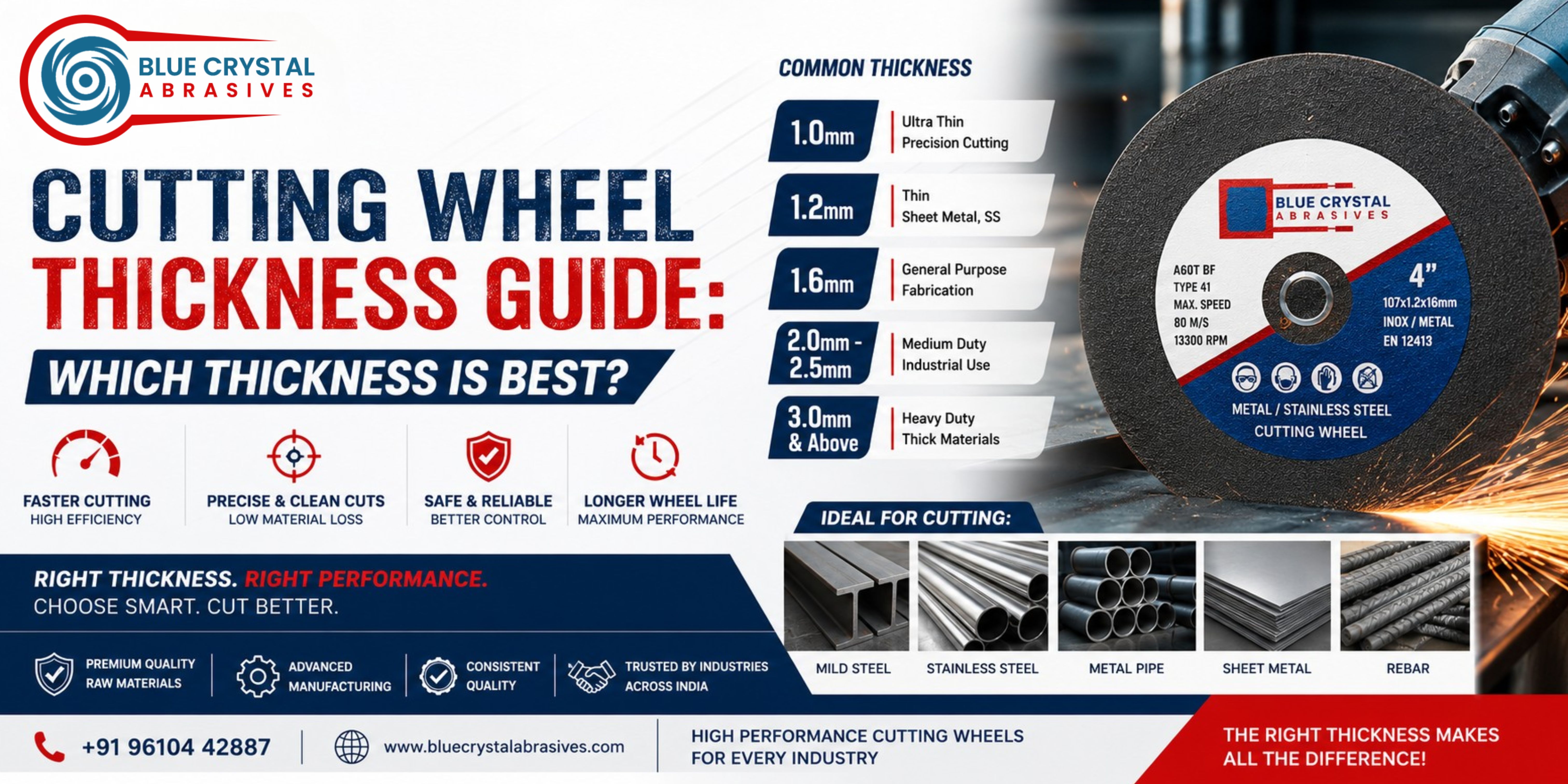
Selecting the right cutting wheel thickness is one of the most important factors in achieving efficient, accurate, and safe cutting results. Whether you're cutting stainless steel sheets, structural steel, pipes, or heavy metal sections, the thickness of the cutting wheel directly affects cutting speed, precision, wheel life, and material wastage. Choosing products from a trusted Cutting Wheel Manufacturer India or an experienced Industrial Abrasives Manufacturer ensures that every cutting application delivers maximum performance while maintaining the highest safety standards.
Many users focus only on wheel diameter, but thickness plays an equally critical role. A wheel that is too thin may wear quickly in heavy-duty applications, while an overly thick wheel can reduce cutting speed and increase material loss. This guide explains how cutting wheel thickness affects performance, which thickness is best for different materials, and how to select the ideal wheel for your industrial requirements.
Why Cutting Wheel Thickness Matters
The thickness of a cutting wheel determines how efficiently it removes material during cutting. It influences several performance factors, including cutting speed, heat generation, precision, vibration, and wheel durability.
Using the correct thickness provides several advantages:
-
Faster cutting speed
-
Cleaner and smoother cuts
-
Reduced burr formation
-
Lower material wastage
-
Better operator control
-
Longer wheel life
-
Improved workplace safety
On the other hand, selecting the wrong thickness can increase operating costs and reduce overall productivity.
Understanding Cutting Wheel Thickness
Cutting wheels are available in various thicknesses depending on their intended application.
Some common thickness options include:
-
1.0 mm – Ultra-thin precision cutting
-
1.2 mm – Thin sheet metal and stainless steel
-
1.6 mm – General-purpose fabrication
-
2.0–2.5 mm – Medium-duty industrial cutting
-
3.0 mm and above – Heavy-duty cutting applications
Each thickness is engineered to balance speed, durability, and cutting performance.
Thin vs Thick Cutting Wheels
Thin Cutting Wheels
Thin cutting wheels are designed for fast and precise cutting with minimal resistance.
Advantages include:
-
High cutting speed
-
Minimal heat generation
-
Reduced material loss
-
Smooth cutting finish
-
Lower operator effort
These wheels are widely used in precision fabrication where maintaining the integrity of the workpiece is essential.
Industries often source these products from a specialized Thin Cutting Wheel Manufacturer to ensure consistent quality and performance.
Thick Cutting Wheels
Thicker cutting wheels are designed for demanding industrial applications where durability is more important than cutting speed.
Benefits include:
-
Greater structural strength
-
Longer operational life
-
Better performance on thick materials
-
Increased resistance to side pressure
Although thicker wheels cut more slowly, they perform exceptionally well in heavy fabrication environments.
Which Thickness Is Best for Different Materials?
Choosing the correct wheel thickness depends primarily on the material being cut.
Stainless Steel
For thin stainless steel sheets and pipes, a Stainless Steel Cutting Wheel with a thickness of 1.0–1.2 mm provides clean cuts while minimizing heat buildup and discoloration.
Mild Steel
General fabrication work typically benefits from wheels between 1.6 mm and 2.5 mm, depending on material thickness.
Structural Steel
Heavy structural components require thicker wheels that provide greater durability and stability.
Cast Iron
Thicker wheels help maintain consistent performance while handling the hardness of cast materials.
Aluminum
Thin wheels reduce clogging and improve cutting efficiency on softer metals.
Selecting Thickness Based on Application
Different industries have different cutting requirements.
Sheet Metal Fabrication
Recommended thickness:
Benefits:
-
Fast cutting
-
Excellent precision
-
Minimal material loss
Pipe Cutting
Recommended thickness:
Provides a balance between speed and durability.
Heavy Fabrication
Recommended thickness:
Suitable for:
-
Structural steel
-
Heavy machinery
-
Industrial construction
General Workshop Use
Many workshops prefer the versatile 4 Inch Cutting Wheel, which is available in multiple thickness options and is compatible with standard angle grinders for everyday cutting tasks.
Factors to Consider Before Choosing Wheel Thickness
Material Thickness
The wheel should match the workpiece thickness. Thin materials require thinner wheels, while thick sections demand stronger wheels.
Machine Compatibility
Always ensure the cutting wheel matches:
-
Wheel diameter
-
Arbor size
-
Maximum RPM
-
Machine specifications
Production Volume
High-volume production environments generally benefit from wheels that offer the best balance between speed and durability.
Required Finish Quality
Precision fabrication often requires thinner wheels because they produce cleaner edges with less finishing work.
The Importance of Manufacturing Quality
The quality of a cutting wheel depends heavily on its manufacturing process.
An experienced Abrasive Cutting Wheel Manufacturer follows strict quality control procedures, ensuring every wheel delivers consistent cutting performance, dimensional accuracy, and safety.
Many industries also rely on products from a trusted Resin Bonded Cutting Wheel Manufacturer because resin-bonded wheels provide superior flexibility, high cutting efficiency, and excellent durability across a wide range of applications.
Safety Considerations
Regardless of thickness, safe operation is essential.
Always remember to:
-
Inspect the wheel before use.
-
Never exceed the rated RPM.
-
Wear proper PPE.
-
Use machine guards.
-
Store wheels in a dry environment.
-
Replace damaged wheels immediately.
Proper handling significantly extends wheel life and improves workplace safety.
Common Mistakes When Selecting Wheel Thickness
Many users reduce productivity by choosing the wrong cutting wheel.
Common mistakes include:
-
Using thick wheels for precision work.
-
Choosing ultra-thin wheels for heavy structural cutting.
-
Ignoring machine RPM ratings.
-
Applying excessive pressure during cutting.
-
Selecting products based only on price instead of quality.
Avoiding these mistakes leads to better cutting performance and lower operating costs.
Why Wheel Thickness Directly Impacts Productivity
The correct cutting wheel thickness not only improves cutting performance but also has a direct impact on overall production efficiency. Selecting the right wheel helps industries reduce downtime, lower consumable costs, and achieve consistent results.
Businesses using the appropriate wheel thickness often experience:
-
Higher production output
-
Faster cutting cycles
-
Reduced wheel consumption
-
Less operator fatigue
-
Better dimensional accuracy
-
Lower material wastage
-
Reduced finishing and rework
-
Improved workplace safety
For manufacturers and fabrication workshops, these benefits translate into significant long-term cost savings.
How to Evaluate a Cutting Wheel Before Buying
Not every cutting wheel delivers the same performance. Before purchasing, consider the following factors:
1. Abrasive Grain Quality
Premium abrasive grains maintain sharpness for longer periods, resulting in faster and more consistent cutting.
2. Bonding Technology
The bonding material determines wheel strength, flexibility, and durability. High-quality resin bonding improves cutting efficiency while reducing wheel wear.
3. Reinforcement
Fiberglass reinforcement increases wheel stability during high-speed operations and enhances operator safety.
4. Balance
Properly balanced wheels reduce machine vibration and improve cutting accuracy.
5. Quality Certifications
Always choose products manufactured according to recognized industry standards to ensure safety and reliability.
Commercial Buying Guide
When comparing manufacturers, don't focus solely on the purchase price. Instead, evaluate the total value they offer.
A reliable supplier should provide:
-
Consistent product quality
-
Advanced manufacturing technology
-
On-time delivery
-
Technical assistance
-
Competitive pricing
-
Quality certifications
-
Strong after-sales support
Investing in premium-quality cutting wheels often results in lower operating costs due to longer wheel life and improved productivity.
Product-Focused Section
Industries with high production demands often require customized abrasive solutions. Businesses looking for private labeling and customized specifications should work with an experienced OEM Cutting Wheel Manufacturer capable of delivering products tailored to their application requirements.
Heavy-duty fabrication industries also benefit from Double Net Cutting Wheels, which provide enhanced reinforcement, greater stability, and improved durability during demanding cutting operations.
For applications requiring exceptional strength and long service life, a premium Industrial Cutting Wheel is an excellent choice. These wheels are engineered for continuous industrial use and perform efficiently on structural steel, heavy machinery, and thick metal sections.
Why Choose Blue Crystal Abrasives Pvt. Ltd.?
Blue Crystal Abrasives Pvt. Ltd. is committed to manufacturing high-performance abrasive solutions that meet the evolving needs of modern industries. By combining advanced production technology, premium raw materials, and rigorous quality control, the company delivers cutting wheels that offer superior reliability and performance.
Key advantages include:
-
Advanced manufacturing infrastructure
-
Strict quality assurance processes
-
High-performance abrasive solutions
-
Consistent product quality
-
Excellent cutting speed
-
Long operational life
-
Reliable customer support
-
Timely delivery across India and international markets
Whether serving fabrication workshops, engineering companies, construction projects, or large manufacturing facilities, Blue Crystal Abrasives focuses on providing products that enhance productivity while maintaining the highest safety standards.
Tips to Maximize Cutting Wheel Life
Proper usage can significantly extend the lifespan of your cutting wheel.
Follow these best practices:
-
Always use the correct wheel thickness for the application.
-
Avoid applying excessive pressure.
-
Operate within the recommended RPM.
-
Inspect the wheel before every use.
-
Store wheels in a cool, dry place.
-
Allow the wheel to perform the cutting without forcing it.
-
Replace worn or damaged wheels immediately.
These simple practices improve cutting efficiency and reduce replacement costs.
Conclusion
Selecting the correct cutting wheel thickness is essential for maximizing cutting speed, precision, wheel life, and workplace safety. Understanding how thickness affects different materials and applications allows businesses to improve efficiency while reducing operating costs. By partnering with a trusted Cutting Wheel Manufacturer India or an experienced Industrial Abrasives Manufacturer, industries can access high-quality cutting solutions engineered for consistent performance, durability, and reliability. Whether your application involves light fabrication or heavy industrial cutting, choosing the right wheel thickness is a smart investment that enhances productivity and delivers long-term value.
Frequently Asked Questions (Google Search-Based)
1. Which cutting wheel thickness is best for metal cutting?
Thin cutting wheels (1.0–1.6 mm) are generally best for sheet metal and precision cutting, while thicker wheels (2.5–3.0 mm) are ideal for heavy-duty industrial applications.
2. Is a thin cutting wheel better than a thick cutting wheel?
Thin wheels offer faster cutting and cleaner finishes, whereas thick wheels provide greater durability and strength for demanding jobs.
3. Which cutting wheel is best for stainless steel?
A dedicated stainless steel cutting wheel specifically designed for INOX materials provides cleaner cuts without contaminating the surface.
4. What thickness cutting wheel should I use for a 4-inch angle grinder?
Most 4-inch angle grinders work efficiently with cutting wheels between 1.0 mm and 2.0 mm, depending on the application and material.
5. How long does a cutting wheel last?
The lifespan depends on wheel quality, material being cut, operating speed, and proper usage. Premium wheels generally provide longer service life and more consistent performance.
6. Can I use the same cutting wheel for all metals?
No. Different materials require different wheel specifications. Using the appropriate wheel improves cutting performance, safety, and wheel life.
7. How do I know if my cutting wheel needs replacement?
Replace the wheel if it becomes excessively worn, damaged, cracked, or no longer delivers consistent cutting performance.
8. Why do cutting wheels break?
Common causes include excessive pressure, improper storage, operating above the rated RPM, machine vibration, and using the wrong wheel for the application.