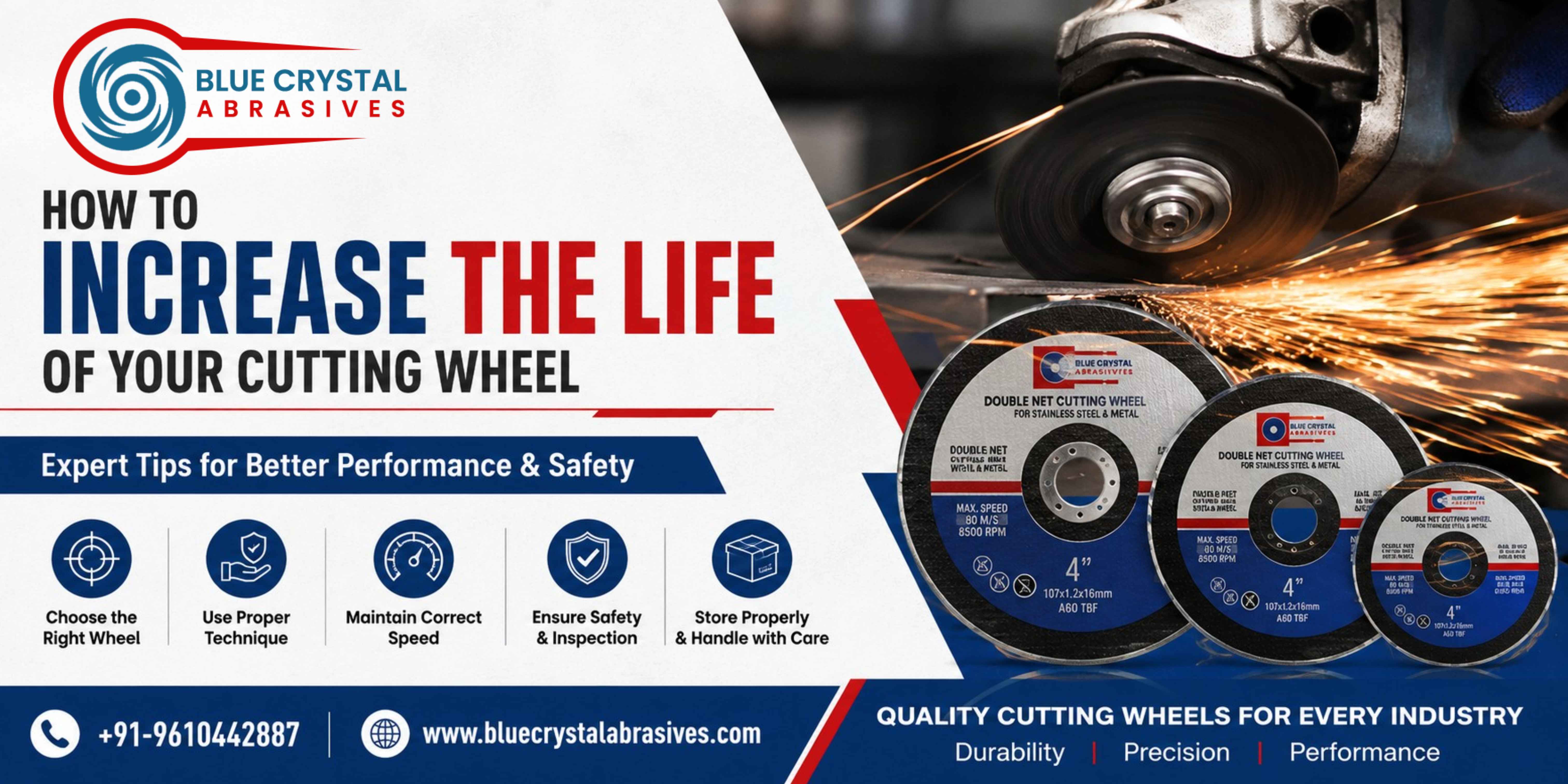
A cutting wheel is an essential tool in fabrication, metalworking, construction, automotive repair, and industrial manufacturing. However, many users experience premature wheel wear, slow cutting, overheating, or breakage because of incorrect wheel selection, excessive pressure, poor storage, and improper operating techniques. Learning how to use, store, and maintain a cutting wheel correctly can significantly improve its performance and service life. A reliable Cutting Wheel Manufacturer India and Abrasive Cutting Wheel Manufacturer can also help businesses choose the right wheel specification for their specific application.
Cutting wheels are designed to remove material through controlled abrasive action. During operation, abrasive grains cut into the workpiece while the bonding system gradually releases worn grains and exposes fresh cutting edges.
The life of a cutting wheel depends on several factors, including:
A wheel that is properly selected and used can deliver consistent cutting performance, reduce downtime, minimize material waste, and improve overall operating costs.
One of the most important ways to increase cutting wheel life is to select a wheel designed for the material and application.
Different metals require different abrasive characteristics. A wheel suitable for mild steel may not provide the same performance on stainless steel, cast iron, or other alloys. Using the wrong wheel can lead to rapid wear, excessive heat, poor cutting speed, and premature failure.
Before purchasing a wheel, consider:
For example, a Stainless Steel Cutting Wheel should be selected when working with stainless steel to achieve cleaner cuts and reduce the risk of unwanted contamination.
Similarly, a Metal Cutting Wheel should be chosen according to the specific metal, thickness, and equipment being used.
Applying excessive force is one of the most common reasons for premature wheel wear.
A cutting wheel is designed to cut through material using abrasive grains rotating at high speed. It should not be forced aggressively through the workpiece. Excessive pressure can:
Instead of forcing the wheel, allow the abrasive grains to perform the cutting action. Apply firm but controlled pressure and maintain a steady movement through the material.
If the wheel is not cutting efficiently, the solution is usually not more pressure. The problem may be an incorrect wheel specification, a dull wheel, insufficient machine power, or an unsuitable cutting technique.
The angle at which a cutting wheel enters the workpiece can significantly affect its life.
For most cutting operations, the wheel should be used in a controlled position that allows the edge of the wheel to perform the cut. Avoid twisting, bending, or applying sideways pressure to the wheel.
Side pressure can place unnecessary stress on the wheel and increase the possibility of:
The wheel should generally be used for cutting rather than grinding. Cutting wheels are engineered for specific applications, and using them for unintended operations can negatively affect performance and safety.
Every cutting wheel has a maximum operating speed. The speed of the grinder or cutting machine should never exceed the maximum RPM marked on the wheel.
Operating a wheel at an excessive speed can create serious safety risks. On the other hand, a machine that operates below the required speed may produce poor cutting performance and cause the operator to apply excessive pressure.
Always check:
Using a properly matched machine and wheel helps maintain consistent performance while reducing unnecessary stress on the abrasive product.
Wheel thickness directly influences cutting speed, durability, and material removal.
Thicker wheels are generally suitable for applications where durability and extended use are important. Thinner wheels can offer faster cutting, lower material loss, and cleaner cuts when used correctly.
A Thin Cutting Wheel Manufacturer typically develops different thickness options to meet the needs of fabrication, engineering, automotive, and industrial users.
However, the thinnest wheel is not always the best choice. Selection should depend on:
For light fabrication and precision cutting, a 4 Inch Cutting Wheel can be a practical option when its specifications match the machine and workpiece.
Poor workpiece support can cause unnecessary vibration and stress on the cutting wheel.
Before starting the cut, ensure that the material is firmly supported. The cut should be planned in a way that prevents the workpiece from closing onto the wheel or creating excessive pressure during the final stage of cutting.
Proper support helps:
This is especially important when cutting long metal sections, pipes, sheets, bars, and structural components.
Wheel pinching occurs when the cut closes around the wheel or the workpiece moves during cutting. This can create sudden pressure on the wheel and significantly increase the risk of damage.
To prevent pinching:
If the wheel suddenly becomes trapped, do not force the machine forward. Stop the operation safely and inspect the workpiece and wheel before continuing.
Storage conditions can have a major impact on the performance and service life of abrasive wheels.
Cutting wheels should be stored in a clean, dry environment away from:
Abrasive wheels should be kept flat and properly supported according to the manufacturer's storage recommendations. Avoid throwing boxes, placing heavy objects on top of wheels, or storing them in areas where they may become damaged.
Proper storage helps preserve the wheel's structural integrity and performance characteristics.
Always inspect a cutting wheel before mounting it on a machine.
Look for signs of:
Never use a wheel that appears damaged or has been dropped. Even damage that is not immediately visible can affect the structural integrity of the product.
A simple inspection before use can help prevent unnecessary accidents and equipment damage.
The wheel must be mounted correctly using suitable flanges and compatible equipment.
Incorrect mounting can cause:
The mounting system should be clean and properly aligned. Do not overtighten the wheel because excessive clamping pressure can damage it.
Always follow the equipment and wheel manufacturer's recommendations for mounting and operation.
Metal chips, dust, and debris can affect cutting performance and may create additional friction.
A clean working area improves:
Regularly remove accumulated debris from the work area and ensure that ventilation is suitable for the application.
One of the most important rules for extending cutting wheel life is to use the wheel only for its intended purpose.
Cutting wheels are designed to cut through materials using the outer edge. Grinding applications can apply lateral forces that the wheel may not be designed to withstand.
Using the wrong abrasive product for grinding can lead to premature wear and potentially dangerous wheel damage.
For grinding operations, use a grinding wheel specifically designed for that purpose.
The quality of the cutting wheel has a direct impact on its service life.
A reliable Industrial Abrasives Manufacturer generally focuses on:
Industrial buyers should not select wheels based only on the lowest price. A low-cost wheel that wears quickly may result in higher overall operating costs due to frequent replacement, downtime, and reduced productivity.
When evaluating suppliers, consider:
Large distributors, industrial users, and private-label brands may require products manufactured according to specific requirements.
An OEM Cutting Wheel Manufacturer can provide customized solutions based on factors such as:
OEM manufacturing can be beneficial for companies that require consistent product specifications across their supply chain.
However, businesses should work with a manufacturer that has the necessary technical expertise and quality-control capabilities to maintain consistency between production batches.
Some cutting wheels are designed with reinforced layers to provide additional structural support.
For demanding applications, Double Net Cutting Wheels may offer additional reinforcement compared with standard single-reinforced designs, depending on the product specification and intended use.
However, reinforcement alone does not guarantee longer wheel life. Performance still depends on:
The correct wheel construction should always be selected according to the application.
Businesses that use a large number of abrasive wheels can reduce consumption by focusing on process control rather than simply purchasing cheaper products.
Operators should understand:
Well-trained operators generally produce more consistent results and reduce unnecessary wheel damage.
Companies can monitor:
This data can help identify whether a particular wheel is delivering good value.
Using different products randomly can make performance difficult to measure. Businesses can improve consistency by selecting suitable wheel specifications for specific materials and applications.
A qualified manufacturer can help identify whether the current wheel specification is appropriate or whether a different formulation, thickness, or reinforcement structure could improve performance.
Avoid these common mistakes:
Excessive force creates unnecessary friction and heat.
A wheel designed for one material may not perform well on another.
This can create serious safety risks and damage the wheel.
Unstable material can cause vibration and wheel pinching.
Moisture can negatively affect abrasive wheel performance.
Cutting wheels are not designed for excessive lateral forces.
A cracked, chipped, or damaged wheel should not be used.
For industrial users, choosing the right manufacturing partner is just as important as choosing the right wheel specification. Blue Crystal Abrasives Pvt. Ltd. focuses on the manufacturing and supply of abrasive products for different industrial applications.
The right abrasive partner can support businesses with:
For businesses that regularly consume cutting wheels, working directly with a professional manufacturer can help improve product consistency and optimize long-term purchasing decisions.
The most effective approach is to use the correct wheel for the material, avoid excessive pressure, maintain the correct machine speed, support the workpiece properly, and store the wheel in suitable conditions.
Usually, excessive pressure creates more friction and heat rather than improving cutting performance. Controlled pressure and the correct wheel specification generally provide better results.
Yes. Using a wheel that is unsuitable for the material or application can lead to rapid wear, overheating, poor cutting performance, and premature replacement.
They should be stored in a clean, dry location away from moisture, extreme temperatures, direct sunlight, chemicals, and physical damage.
Proper support helps prevent vibration and wheel pinching. It also allows the wheel to cut more consistently and reduces unnecessary stress.
No. Thin wheels can provide fast and precise cutting, but the correct thickness depends on the material, machine, application, and operating conditions.
Replace the wheel when it reaches its minimum usable diameter, becomes damaged, shows cracks or chips, or no longer performs properly according to the manufacturer's recommendations.
Yes. A qualified manufacturer can review the application and recommend suitable wheel specifications, abrasive types, thicknesses, and reinforcement structures.
Increasing the life of a cutting wheel is not dependent on one single factor. Proper wheel selection, controlled cutting pressure, correct operating speed, workpiece support, careful storage, regular inspection, and good operator technique all contribute to better performance and longer service life. For industrial buyers, choosing a dependable Cutting Wheel Manufacturer India and Abrasive Cutting Wheel Manufacturer can also make a significant difference in product consistency, technical support, and long-term operating efficiency. When these practices are followed correctly, businesses can reduce unnecessary wheel consumption, improve productivity, and achieve more cost-effective cutting operations.