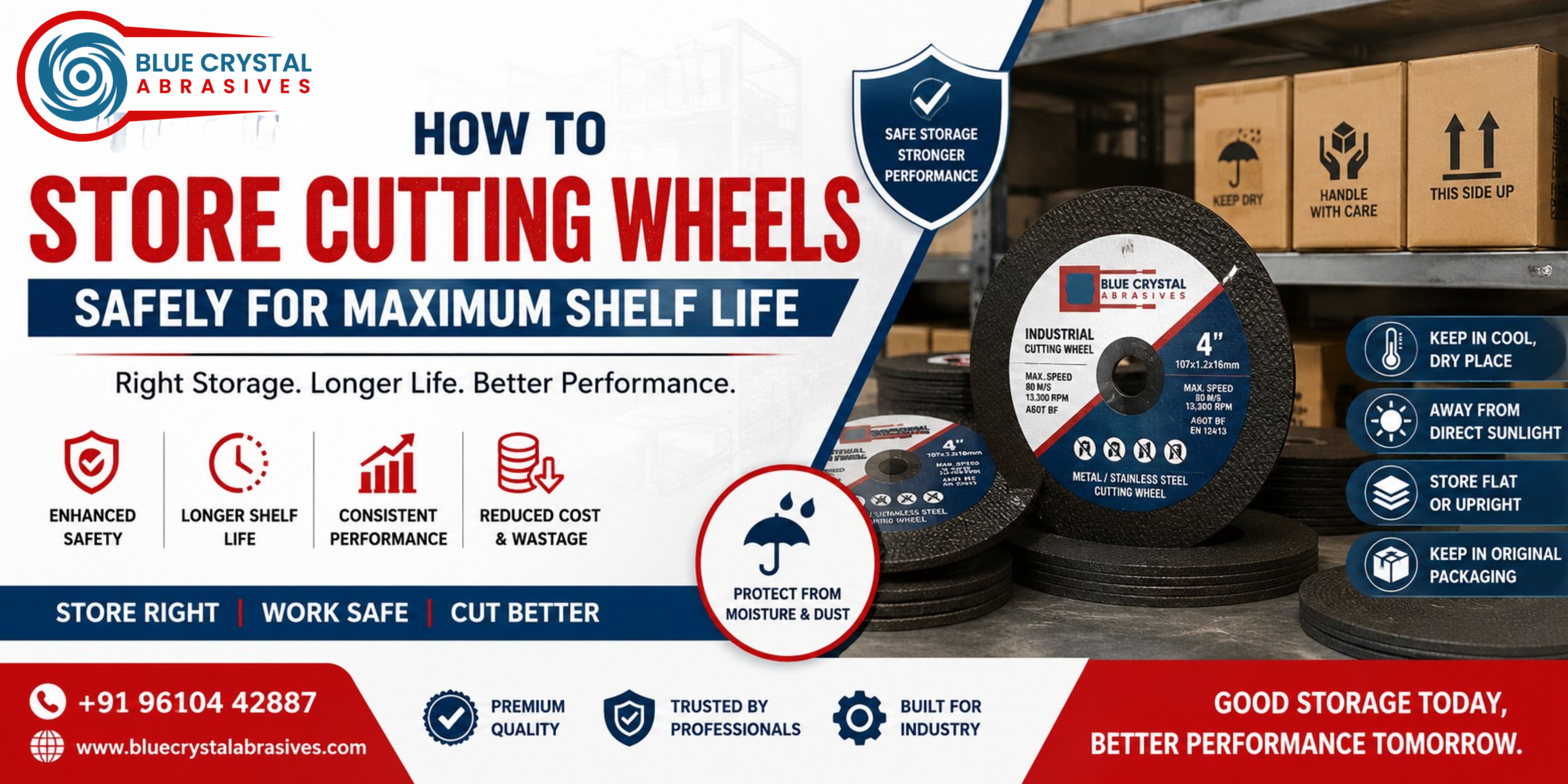
Proper storage of cutting wheels is just as important as selecting the right product. Even premium-quality cutting wheels can lose their performance and become unsafe if stored incorrectly. Businesses that purchase products from a trusted Cutting Wheel Manufacturer India or an experienced Thin Cutting Wheel Manufacturer understand that correct storage practices help maintain wheel strength, cutting efficiency, and workplace safety. This guide explains the best methods for storing cutting wheels safely, common storage mistakes to avoid, and practical tips for maximizing shelf life while protecting your investment.
Whether you operate a fabrication workshop, construction company, engineering unit, or manufacturing plant, proper storage can reduce replacement costs, improve productivity, and ensure consistent cutting performance.
Cutting wheels are manufactured using abrasive grains, reinforcing materials, and bonding agents that can be affected by moisture, excessive heat, sunlight, and improper handling.
Poor storage can lead to:
Proper storage helps maintain the wheel's original quality until it is ready for use.
Several environmental and handling factors influence how long a cutting wheel remains in good condition.
These include:
Controlling these factors significantly extends the usable life of cutting wheels.
Moisture is one of the biggest enemies of abrasive cutting wheels. High humidity can weaken bonding materials over time.
Store wheels in:
Avoid storing wheels near water sources or damp floors.
Extreme temperatures may affect the bonding materials used during manufacturing.
Best practices include:
Stable temperatures help preserve wheel integrity.
Continuous exposure to sunlight may deteriorate packaging and affect resin-bonded products.
Always store wheels:
This simple practice helps maximize shelf life.
Improper stacking can cause deformation or accidental damage.
Follow these guidelines:
Store flat on clean shelves without excessive stacking.
Store vertically in dedicated racks with proper support.
Because thin wheels are more delicate, handle them carefully and avoid placing heavy objects on top.
Professional products supplied by a trusted Thin Cutting Wheel Manufacturer often include storage recommendations that should always be followed.
Manufacturers design packaging to protect wheels from moisture, dust, and accidental impact.
Avoid removing wheels from their packaging until they are needed.
Original packaging also helps identify:
Even small impacts may create invisible cracks that reduce wheel safety.
Always:
Proper handling extends both safety and service life.
A simple inventory system helps prevent older stock from remaining unused for extended periods.
Use the First In, First Out (FIFO) method:
This reduces waste and ensures consistent product quality.
Many cutting wheel problems begin long before the wheel reaches the machine.
Avoid these common mistakes:
Correcting these simple mistakes can greatly increase shelf life.
Even properly stored wheels should always be inspected before installation.
Check for:
Never use a damaged cutting wheel.
Storage is important, but product quality is equally critical. Purchasing from a reputable Abrasive Cutting Wheel Manufacturer ensures that wheels are manufactured using premium raw materials and undergo strict quality control.
Many industries also rely on products from a trusted Resin Bonded Cutting Wheel Manufacturer because resin-bonded wheels provide excellent durability, cutting performance, and storage stability when handled correctly.
For corrosion-resistant applications, using a dedicated Stainless Steel Cutting Wheel helps achieve clean, contamination-free cuts, while a premium Metal Cutting Wheel is ideal for general steel fabrication and industrial metalworking.