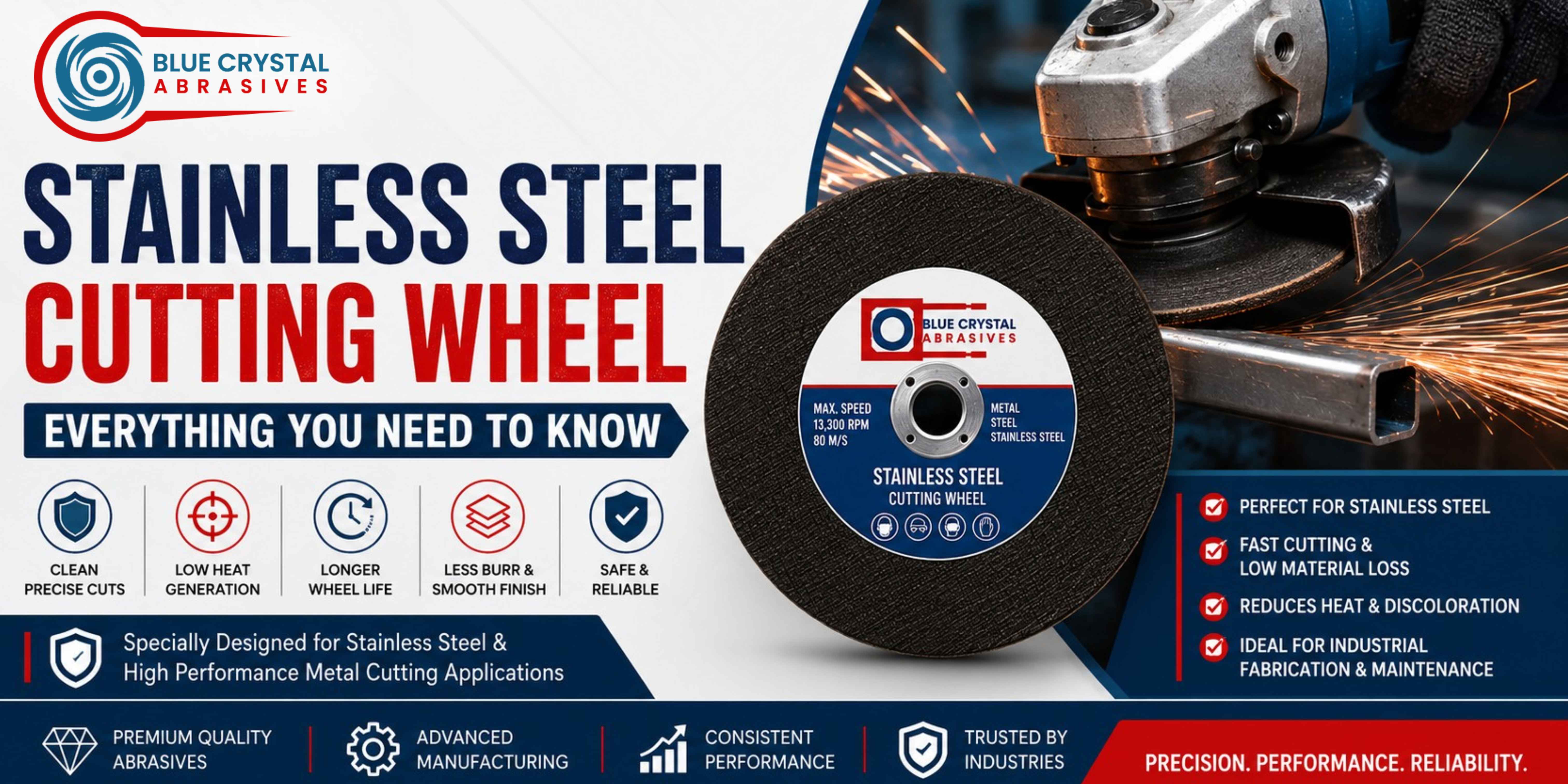
Choosing the right abrasive for stainless steel is essential for achieving clean cuts, reducing heat, and maintaining the quality of the workpiece. Unlike ordinary metals, stainless steel can generate significant heat during cutting and may be sensitive to contamination from unsuitable abrasives. Selecting a high-quality stainless steel cutting wheel or working with a reliable Cutting Wheel Manufacturer India can make a major difference in cutting speed, finish quality, wheel life, and overall productivity. This complete guide explains how stainless steel cutting wheels work, what makes them different, how to select the right product, and how to use them safely and efficiently.
A stainless steel cutting wheel is a thin bonded abrasive disc specifically designed to cut stainless steel and related alloys. It is used with compatible angle grinders, cut-off machines, and other approved power tools.
These wheels are engineered to balance several performance requirements:
A stainless steel cutting wheel generally uses carefully selected abrasive grains and bonding materials to handle the unique characteristics of stainless steel.
Stainless steel is strong, corrosion-resistant, and often more difficult to cut than mild steel. Its composition and physical properties can create additional challenges during abrasive cutting.
Common challenges include:
Stainless steel can retain heat during cutting. Excessive heat may cause discoloration, surface damage, and reduced cutting efficiency.
If excessive pressure or incorrect cutting techniques are used, some stainless steel grades can become harder at the cutting area. This can make the next cutting pass more difficult.
Abrasives used on ordinary carbon steel may contain materials that can leave unwanted particles on stainless steel. These contaminants may affect the appearance and corrosion resistance of the workpiece.
For this reason, using an abrasive specifically designed for stainless steel is an important consideration.
A cutting wheel contains abrasive grains held together by a bonding system. When the wheel rotates at high speed, the abrasive grains gradually remove small particles of material from the workpiece.
As the cutting action continues:
This self-sharpening action helps maintain cutting performance throughout the working life of the wheel.
Not all cutting wheels offer the same performance. A quality product should be selected based on the application and machine requirements.
A properly designed wheel creates a narrow kerf, helping reduce material loss and producing a cleaner cut.
This is particularly important when working with:
A suitable wheel should cut efficiently without requiring excessive pressure. Faster, smoother cutting helps reduce unnecessary heat buildup.
The operator's technique also matters. Applying too much force can increase friction and cause the workpiece to heat up.
High-quality abrasive grains help provide consistent cutting performance from the beginning to the end of the wheel's service life.
This consistency is important for workshops performing repeated production cuts.
For demanding applications, a reinforced wheel provides additional structural support. A Reinforced Cutting Wheel may contain fiberglass layers that help improve strength and stability during operation.
The exact reinforcement required depends on the wheel design, size, operating speed, and intended application.
A general-purpose Metal Cutting Wheel may be suitable for certain carbon steel applications, but stainless steel often requires a more specialized solution.
The main differences may include:
A wheel designed specifically for stainless steel can help maintain a cleaner workpiece surface and improve cutting efficiency.
This does not mean one product is automatically suitable for every stainless steel grade. Material thickness, grade, machine type, and production requirements should also be considered.
Wheel thickness plays an important role in cutting performance.
A thin wheel is often preferred when the application requires:
For industries that require specialized products for precision applications, an experienced Thin Cutting Wheel Manufacturer can provide solutions for different material thicknesses and production requirements.
Thicker wheels may provide additional stability in certain applications. However, they may require more material removal and can generate different levels of heat and resistance.
The ideal thickness depends on the workpiece and the equipment being used.
A Resin Bonded Cutting Wheel uses a resin-based bonding system to hold abrasive grains together.
Resin-bonded wheels are widely used because they can offer a combination of:
The quality of the raw materials, formulation, reinforcement, and manufacturing process all influence the final performance of the wheel.
Before purchasing a wheel, consider the following factors.
Different stainless steel grades have different characteristics. The wheel should be selected according to the material being cut.
Thicker sections may require a different wheel specification compared with thin sheets or tubes.
Check compatibility with:
The maximum operating speed of the wheel must be compatible with the machine.
Never use a wheel at a speed exceeding its rated limit.
The diameter must match the equipment and application requirements.
A workshop performing occasional repairs may have different requirements from a high-volume production facility.
Stainless steel cutting wheels are used in a wide range of industries.
Used for cutting pipes, sheets, angles, and fabricated components.
Stainless steel is widely used in equipment where hygiene and corrosion resistance are important.
Used for components, exhaust systems, and fabrication work.
Used for stainless steel structures, railings, and architectural components.
Useful for maintenance, repair, and general metalworking.
Stainless steel components often require precise cutting during manufacturing and maintenance operations.
Correct operation is just as important as product selection.
Look for:
Never use a damaged wheel.
The machine must operate within the wheel's rated speed.
Never remove the machine guard during operation.
Recommended protection may include:
Let the abrasive wheel perform the cutting. Excessive force can increase heat and reduce wheel life.
A cutting wheel is designed for cutting action. Side pressure or twisting can increase stress on the wheel.
Many performance problems are caused by incorrect operating practices.
A general-purpose product may not provide the best results for stainless steel.
This can cause overheating and premature wheel wear.
Exceeding the maximum speed creates serious safety risks.
Even small cracks can compromise wheel integrity.
Moisture and improper handling can affect the bonding system.
The same wheel specification may not be ideal for every application.
To get better results:
These simple practices can improve cutting quality and reduce unnecessary wheel consumption.
The quality of the cutting wheel depends heavily on manufacturing standards.
A reliable Abrasive Wheel Manufacturer focuses on:
For industrial buyers, consistency is especially important. A wheel that performs differently from batch to batch can affect productivity and production planning.
Businesses should evaluate more than just the purchase price when choosing a Cut Off Wheel Manufacturer.
Important factors include:
A dependable supplier can help businesses select suitable products for their specific materials and applications.
Cutting wheels and grinding wheels are designed for different operations.
A stainless steel cutting wheel is designed primarily for separating material, while a Grinding Wheel is generally used for:
Using the right product for the right operation improves both safety and performance.
A cutting wheel should not be used as a grinding wheel, and a grinding wheel should not be used for applications it was not designed to perform.
Modern fabrication and manufacturing often require fast production cycles. A High Speed Cutting Wheel may be used in suitable applications where the machine, wheel specification, and operating conditions are compatible.
However, speed should never be prioritized over safety. Always follow the product's operating instructions and maximum speed rating.
Industrial buyers often prefer established manufacturers because they need consistent results over long-term operations.
A professional manufacturer can support:
For companies searching for dependable abrasive products, choosing a reputable Cutting Wheel Manufacturer India can help improve sourcing reliability and long-term operational performance.
The ideal stainless steel cutting wheel depends on the specific application.
A professional product selection process should consider:
For occasional workshop use, a general specification may be sufficient. For high-volume industrial production, a specialized product may deliver better overall value.
A quality stainless steel cutting wheel can make a significant difference in cutting speed, precision, heat control, wheel life, and workplace safety. The right selection depends on the material grade, thickness, machine compatibility, wheel specification, and application requirements. By choosing products from a reliable Cutting Wheel Manufacturer India and following correct operating and storage practices, fabrication shops, engineering companies, and industrial users can achieve more consistent cutting performance and better long-term value.
The best wheel is one specifically designed for stainless steel and compatible with the material thickness, machine type, and operating speed. Product selection should always follow the manufacturer's specifications.
Some general-purpose wheels may cut stainless steel, but a wheel specifically designed for stainless steel is generally better suited for controlling contamination, heat, and cutting performance.
Discoloration is commonly associated with excessive heat. Excessive pressure, incorrect wheel selection, or poor cutting technique can contribute to heat buildup.
Use a suitable wheel, avoid excessive pressure, maintain proper machine speed, and allow the wheel to cut without forcing it through the material.
A cutting wheel is designed to separate material, while a grinding wheel is designed for material removal, surface finishing, weld removal, and shaping.
Service life depends on the wheel quality, material thickness, cutting technique, machine speed, and frequency of use. There is no single lifespan that applies to every application.
It depends on the wheel specification and application. The wheel should be selected according to the material thickness and the manufacturer's recommendations.
Reinforcement can improve the structural strength and stability of a suitable wheel. However, safe operation still requires correct installation, machine compatibility, guards, and proper working practices.
Inspect the wheel for damage, verify its maximum RPM, confirm the correct size and machine compatibility, and ensure the proper guard and PPE are being used.
Store them in a dry, clean environment away from moisture, excessive heat, direct sunlight, and damaging chemicals. Handle them carefully to prevent impact damage.