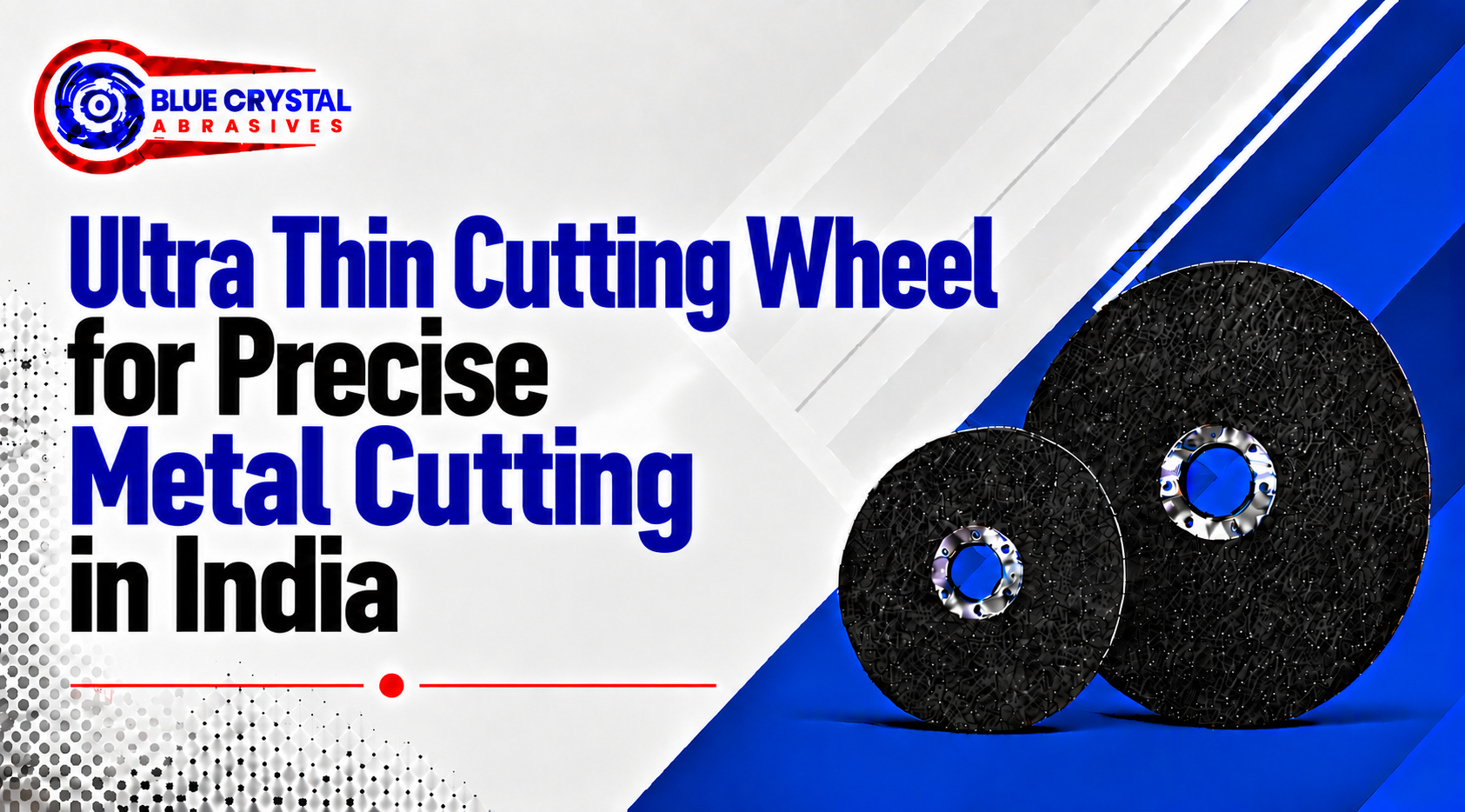
A small difference in a cutting wheel can have a noticeable effect on everyday metalworking. When the job involves thin sheets, pipes or components where too much material should not be removed, wheel thickness becomes especially important.
An Ultra Thin Cutting Wheel is designed to create a narrow cut while removing less material than a thicker cutting disc. This makes it useful for fabrication jobs where cutting speed, control and accuracy all matter.
But choosing a thin wheel simply because it looks suitable is not enough. The material being cut, machine speed, wheel dimensions and type of work should all be considered before making a selection.
Fabrication workshops work with many different forms of metal. On the same day, an operator might need to cut a steel pipe, shorten a rod or prepare sheet metal for the next stage of production.
A Metal Cutting Wheel can be used for many of these routine applications but the same wheel specification will not necessarily suit every job.
A thicker workpiece may require a different approach from a thin sheet. Machine type and operating speed also affect which wheel should be used.
Diameter, thickness, abrasive composition and maximum operating speed are therefore worth checking before the work begins. Matching these factors with the application can make everyday cutting more consistent.
Stainless steel is common in fabrication but cutting it requires some attention to wheel selection.
A Stainless Steel Cutting Wheel is intended for applications involving stainless steel pipes, sheets, tubes and profiles. Selecting a wheel designed for the material helps the operator maintain better control during the cut.
This becomes particularly important when the finished component will remain visible or move directly to another fabrication process.
Wheel size and thickness should still be matched with the machine being used. The maximum RPM marked for the wheel should never be lower than the operating speed of the machine.
The most obvious difference is thickness.
An Ultra Thin Cutting Wheel has a narrow cutting section. Because the wheel removes a smaller amount of material as it moves through the workpiece, it creates a narrower kerf than many thicker cutting discs.
That can be useful when material loss needs to be kept low.
The narrow profile can also make thin wheels practical for repeated cutting work where operators need to make relatively quick and controlled cuts.
They are commonly considered for fabrication, engineering, maintenance, automotive work and other metalworking applications.
Thickness alone, however, does not determine how well a wheel will perform. Several other factors matter:
Manufacturing consistency matters as well. Dimensions, reinforcement and abrasive construction need to remain consistent from one wheel to the next, particularly when the product is being used repeatedly in industrial work.
Not every cutting job involves large metal sections.
For smaller workshop jobs, a 4 Inch Cutting Wheel can be a practical size when used with a compatible angle grinder or cutting machine.
It may be used for smaller pipes, rods, brackets, sheets and similar components where a compact tool is easier to handle.
The size of the wheel should still match the machine. Before fitting a 4-inch disc, users should check the bore size, wheel dimensions and maximum RPM.
A wheel should never be selected only because its diameter appears to fit the grinder.
The answer depends on what you are cutting.
If the job involves thin material and a narrow cut is preferred, an Ultra Thin Cutting Wheel may be worth considering. A general Metal Cutting Wheel may make more sense for routine fabrication work involving a wider range of metal components.
For stainless steel jobs, material compatibility becomes particularly important and a suitable Stainless Steel Cutting Wheel should be selected.
The workpiece itself also needs to be considered. Think about its thickness, shape and the depth of cut required.
After that, check the machine specifications and choose a wheel with compatible dimensions and operating speed.
There is no single cutting wheel specification that is ideal for every metalworking job.
Cutting wheels are consumable products but consistency still matters.
In a workshop or production environment, operators may use many wheels over the course of regular work. Large variations in wheel dimensions or construction can make cutting less predictable.
This is why the manufacturing process is an important part of abrasive wheel selection.
Blue Crystal Abrasives manufactures resin-bonded abrasive cutting wheels for different metalworking and industrial requirements. Available options can cover different wheel sizes, thicknesses and applications depending on customer requirements.
Whether the requirement is for an Ultra Thin Cutting Wheel, Metal Cutting Wheel, Stainless Steel Cutting Wheel or 4 Inch Cutting Wheel, the specification should be selected according to the material and machine rather than relying on wheel size alone.
Good metal cutting starts before the machine is switched on.
The material needs to be identified first. After that, the operator can consider the required cutting depth, wheel diameter, thickness and machine speed.
An Ultra Thin Cutting Wheel can be a useful choice when a narrow cut and lower material removal are important. Other applications may be better handled with a different wheel specification.
What matters most is matching the abrasive wheel to the actual job.
Checking material compatibility, wheel dimensions, reinforcement and RPM requirements before use can make cutting work more consistent and help users choose a product that fits their fabrication needs.