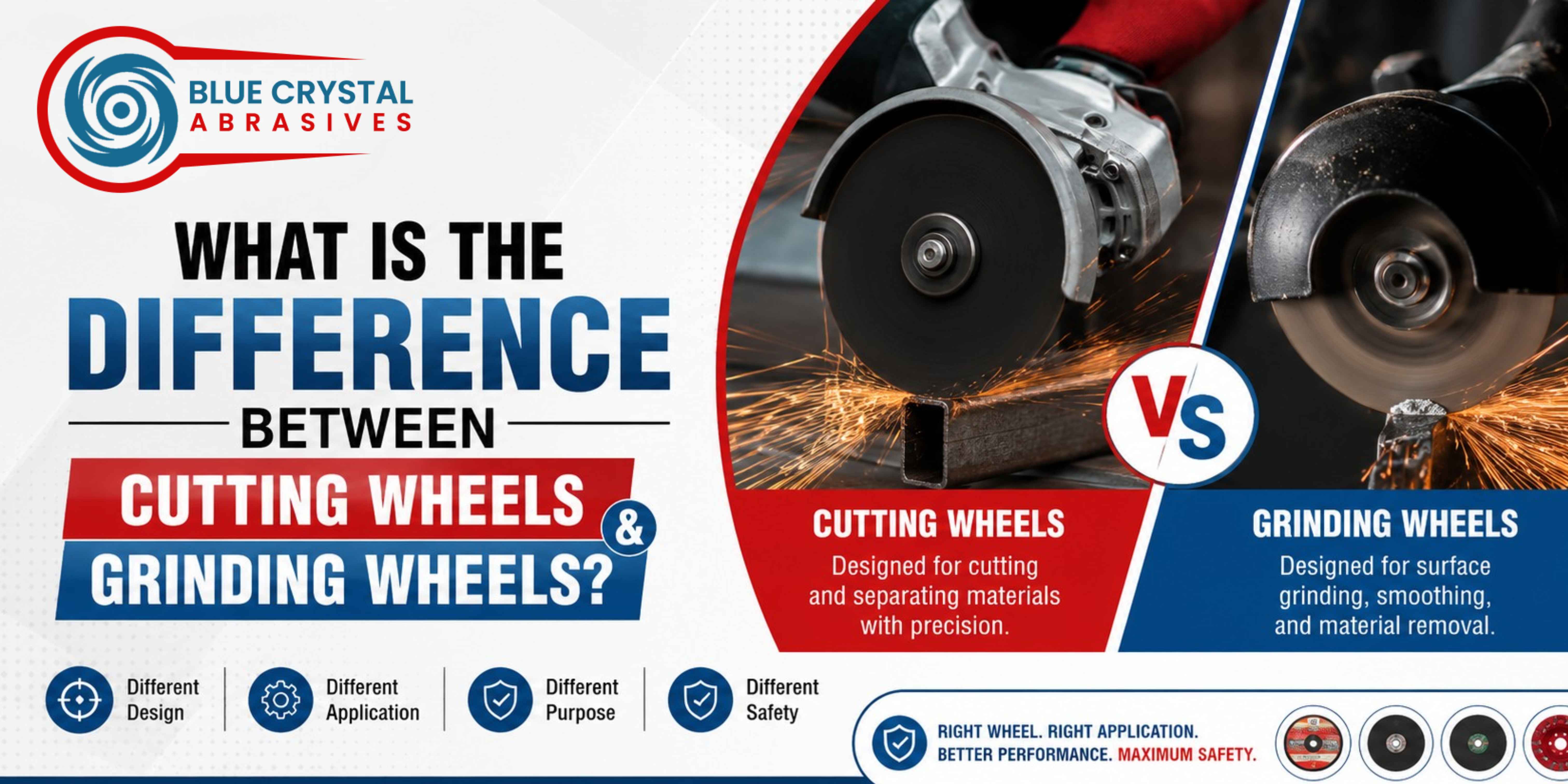
When working with metal, stainless steel, fabrication materials, or industrial components, selecting the right abrasive wheel is essential for achieving accurate results and maintaining workplace safety. Although cutting wheels and grinding wheels are both used with angle grinders and other power tools, they are designed for different operations. A trusted Industrial Abrasives Manufacturer and Cutting Wheel Manufacturer India can help users choose the correct wheel based on material, application, machine speed, and required finish.
This guide explains the key differences between cutting wheels and grinding wheels, their construction, applications, safety requirements, and how to select the right abrasive wheel for industrial work.
The primary difference is simple:
A cutting wheel is typically thin and engineered to make a narrow, precise cut. A grinding wheel is generally thicker and built to withstand the side pressure required for grinding, deburring, blending, and surface preparation.
Using the wrong wheel for an application can reduce performance, damage the workpiece, or create a serious safety hazard. Therefore, understanding the difference is important for professionals in fabrication, engineering, construction, automotive, manufacturing, and maintenance industries.
A cutting wheel, also known as a cut-off wheel, is an abrasive disc designed primarily for separating or cutting materials. It removes material through a controlled, high-speed abrasive action.
Cutting wheels are available in different diameters and thicknesses. Thin wheels are commonly preferred when users need fast cutting, minimal material loss, and a clean cut.
A Metal Cutting Wheel is commonly used for cutting:
The wheel is designed to be used with its outer edge. The cutting operation should be performed by allowing the abrasive disc to move through the material without applying excessive side pressure.
Most cutting wheels offer:
For applications where precision and speed are important, thin cutting wheels can offer significant advantages over thicker abrasive discs.
A grinding wheel is designed for surface treatment and controlled material removal. Unlike a cutting wheel, a grinding wheel is generally used with its face or side surface, depending on the specific wheel design and application.
Grinding wheels are used for:
Grinding wheels are usually thicker than cutting wheels because they need to withstand the forces generated during grinding operations.
A grinding wheel is not designed to make deep, narrow cuts. Similarly, a thin cutting wheel should not be used for grinding or side pressure applications.
| Feature | Cutting Wheel | Grinding Wheel |
|---|---|---|
| Primary purpose | Cutting and separating material | Grinding and surface removal |
| Typical construction | Thin | Thicker |
| Main contact area | Outer edge | Face or grinding surface |
| Material removal | Narrow and precise | Broad and controlled |
| Common applications | Cutting pipes, sheets, rods, and profiles | Deburring, weld removal, and surface preparation |
| Side pressure | Should be avoided | Designed for suitable grinding pressure |
| Finish | Clean separation | Surface smoothing or material removal |
The most important rule is to use the wheel only for the purpose for which it has been designed.
The thickness of a cutting wheel directly influences its performance. A thinner wheel generally produces a narrower cut and removes less material during the operation.
For example, an Ultra Thin Cutting Disc is designed for applications where speed, precision, and low material wastage are important.
Thin wheels are often preferred for:
A 1mm Cutting Wheel can be useful for precision cutting applications where a narrow kerf and reduced resistance are required. However, the correct wheel should always be selected according to the material, tool compatibility, and manufacturer's specifications.
An ultra-thin cutting wheel is a specialized abrasive disc manufactured with a reduced thickness to provide faster and more precise cutting.
Compared with standard cutting wheels, ultra-thin variants may offer:
An Ultra Thin Cut Off Wheel is commonly used in industries where cutting accuracy and productivity are important.
However, ultra-thin wheels require proper handling. Excessive bending, twisting, or side pressure can damage the wheel and create unsafe operating conditions.
Stainless steel requires suitable abrasive products because improper wheel selection can lead to contamination, overheating, discoloration, or poor cutting performance.
A Stainless Steel Cutting Wheel is specifically designed for cutting stainless steel and similar materials. Depending on the product formulation, these wheels may be designed to reduce the risk of unwanted contamination from materials that are unsuitable for stainless steel applications.
A Thin Cutting Wheel for Stainless Steel can be particularly useful when cutting:
When selecting a wheel for stainless steel, users should consider the abrasive formulation, wheel thickness, application, machine speed, and required finish.
An Ultra Thin Abrasive Cutting Wheel is commonly used for fast and precise cutting in applications where minimum material loss is preferred.
Typical applications include:
Thin sheets can be cut with better control when the wheel produces minimal resistance.
Thin abrasive wheels can help create clean cuts in metal tubes and pipes.
Repair and maintenance professionals often require precise cutting for metal components and bodywork.
Workshops use thin cutting wheels for cutting rods, profiles, brackets, and other components.
Suitable wheels can provide efficient cutting performance for stainless steel fabrication work.
No. A standard cutting wheel should not be used for grinding.
Cutting wheels are designed to withstand forces applied primarily along the edge of the wheel. Grinding operations can apply side pressure to the disc, which may cause a thin cutting wheel to bend, crack, or break.
Similarly, a grinding wheel should not be used as a cutting disc unless it is specifically designed and approved for that application.
This distinction is one of the most important safety principles when using abrasive products.
A standard grinding wheel should not be used for cutting.
Grinding wheels are designed for a different type of operation and have a different construction. Attempting to cut with a grinding wheel can create excessive resistance and increase the possibility of wheel damage.
Always check the markings and technical specifications on the abrasive wheel before using it.
Choosing the correct wheel depends on several factors.
First, determine whether you need to:
For cutting, select a cutting wheel. For surface material removal, choose a suitable grinding wheel.
Different materials require different abrasive solutions. Mild steel, carbon steel, stainless steel, and other alloys may require different wheel specifications.
A thin wheel may be suitable for precision cutting and low material loss, while a thicker wheel may be preferred for specific heavy-duty applications.
The wheel diameter and maximum RPM must be compatible with the grinder or cutting machine. Never exceed the maximum operating speed marked on the wheel.
If the goal is a clean and narrow cut, a suitable thin cutting wheel may be appropriate. If the goal is to remove surface material or smooth welds, a grinding wheel may be the better choice.
Correct wheel selection is only one part of safe abrasive operation.
Do not use wheels that are cracked, damaged, heavily worn, or improperly stored.
The machine guard should be correctly installed and positioned according to the tool and wheel requirements.
Recommended PPE may include:
The maximum operating speed of the wheel must always be greater than or equal to the operating speed of the machine.
Let the abrasive wheel perform the work. Excessive force can reduce wheel life and affect safety.
This is a critical safety rule. A cutting wheel should be used for cutting operations only.
The performance of an abrasive wheel depends on several factors, including:
A reliable Ultra Thin Cutting Wheel Manufacturer focuses on consistent production quality and application-specific product development.
For businesses purchasing abrasive wheels in bulk, working with an Ultra Thin Cutting Wheel Manufacturer India can provide access to product customization, bulk supply, technical support, and OEM or private-label opportunities, depending on the supplier's capabilities.
When selecting a supplier or manufacturer, buyers should evaluate:
A reliable supplier should offer suitable solutions for different materials and applications.
Consistent wheel performance is important for industrial productivity and predictable results.
The supplier should be able to help users select the right wheel based on material, machine, and operation.
Businesses with bulk requirements may benefit from working with a manufacturer that can support customized specifications.
Abrasive wheels should be manufactured according to relevant quality and safety requirements applicable to the target market.
Consistent availability and timely delivery are essential for industrial users and distributors.
The choice depends entirely on the operation.
Choose a cutting wheel when you need to:
Choose a grinding wheel when you need to:
Understanding this difference helps improve productivity, reduce wheel wastage, and support safer working practices.
Understanding the difference between cutting wheels and grinding wheels is essential for achieving efficient performance and maintaining safe working practices. Cutting wheels are designed for precise material separation, while grinding wheels are developed for surface treatment, deburring, weld removal, and controlled material removal. Selecting the right wheel based on the application, material, thickness, machine speed, and operating requirements can improve productivity and reduce unnecessary wheel consumption.
Whether you need precision cutting, stainless steel fabrication, heavy-duty metalworking, or reliable industrial abrasive solutions, choosing products from a quality-focused Industrial Abrasives Manufacturer and experienced Cutting Wheel Manufacturer India can help ensure consistent performance, dependable supply, and the right abrasive solution for your application.
Cutting wheels are designed to separate materials through edge cutting, while grinding wheels are designed to remove material from surfaces through grinding and abrasion.
No. A standard cutting wheel should not be used for grinding because side pressure can damage the wheel and create a safety risk.
A standard grinding wheel should not be used for cutting. Use a suitable cutting wheel designed for the specific material and application.
Thinner wheels can provide faster cutting, reduced material wastage, and improved precision. However, the correct thickness depends on the material, application, and machine.
A wheel specifically designed for stainless steel applications is generally the preferred option. Always check the product specifications before use.
Check the wheel for damage, verify its maximum RPM, confirm machine compatibility, use the correct guard, and wear appropriate PPE.
Look for a manufacturer offering consistent quality, suitable product specifications, technical support, reliable supply, and experience with your required applications.